
By Julian Barton, EGM | Feedback ASAP | feedbackasap.com
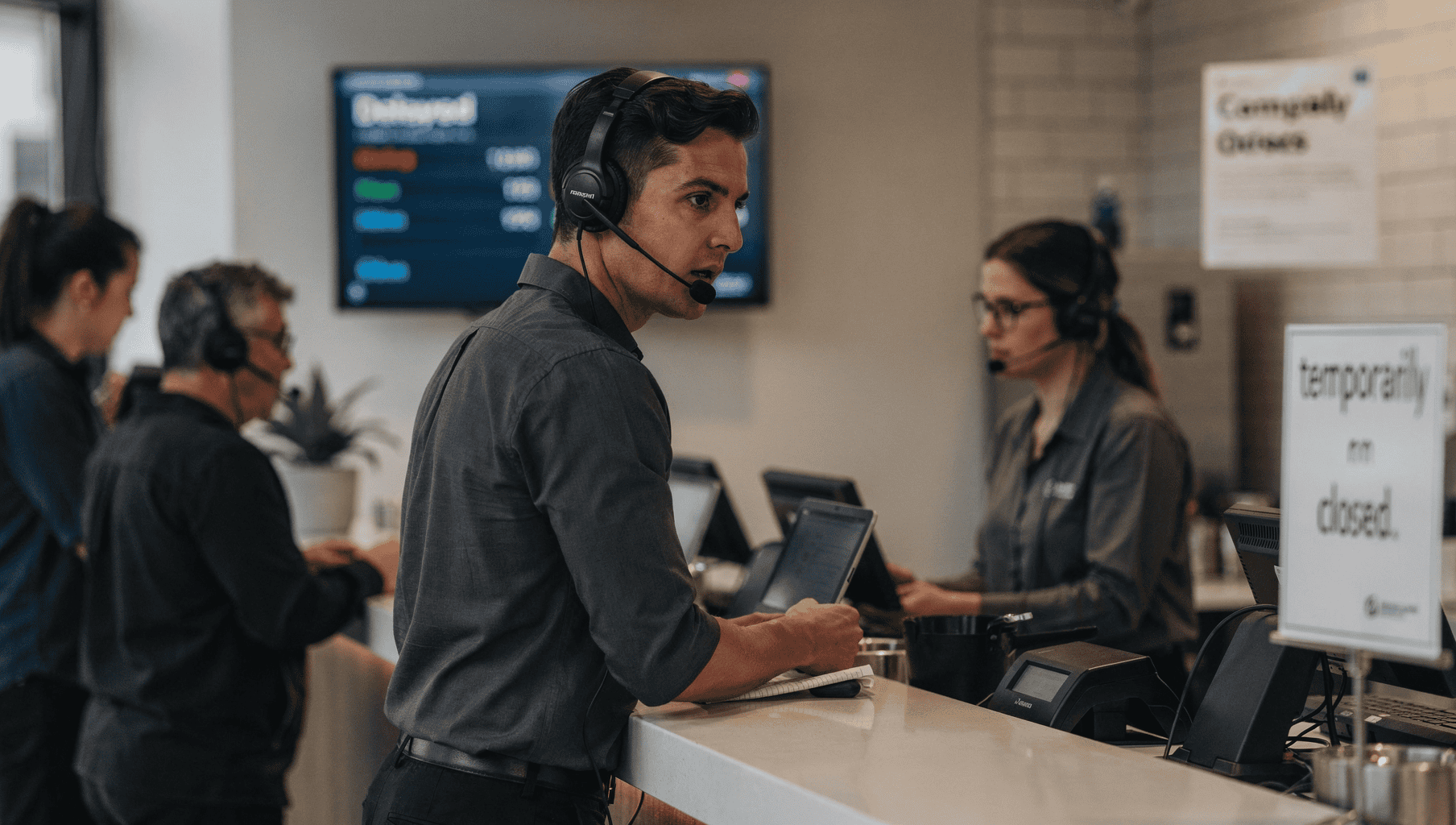
Every business will have a day when something breaks that has nothing to do with the people serving customers that day. A system fails. A supplier lets you down. A weather event closes stores, delays deliveries, or takes services offline for hours at a time. The people answering the phones, replying to messages, and standing behind the counter did not cause the problem. But they are the ones who have to face it. How they respond becomes customer experience during a crisis, and it is remembered long after the incident itself is forgotten.
How a business handles that day says more about its customer experience than any month of good service ever will. Good CX in normal conditions is expected. Good CX under pressure, when nothing is working the way it should, is remembered. It becomes the story customers tell about the business for years afterwards, for better or worse.
Good CX in normal conditions is expected. Good CX under pressure is remembered.
The instinct in a crisis is to focus entirely on fixing the problem. That instinct is right, but it is not enough on its own. The businesses that come through adversity with their reputation intact, or even strengthened, are the ones that treat the moment as a test of the whole customer experience system, not just a technical fault to patch. Empathy first, real listening, fast learning, visible action, and a team that is genuinely engaged in the response. That combination is what turns a bad day into proof of who you are.
Empathy First: The Tone That Sets Everything Else
When something goes wrong that is outside a customer’s control, the first thing they need is not a solution. It is an acknowledgment. Being told when a fix will happen matters less in the first minute than being told that someone understands the disruption is real and that it is being taken seriously.
Teams under pressure often default to the fastest possible information transfer: what happened, what is being done, when it will be resolved. All of that matters. But leading with empathy first, before any of the practical detail, changes how everything that follows is received. A customer who feels heard will wait longer, forgive more, and stay more loyal than a customer who feels processed.
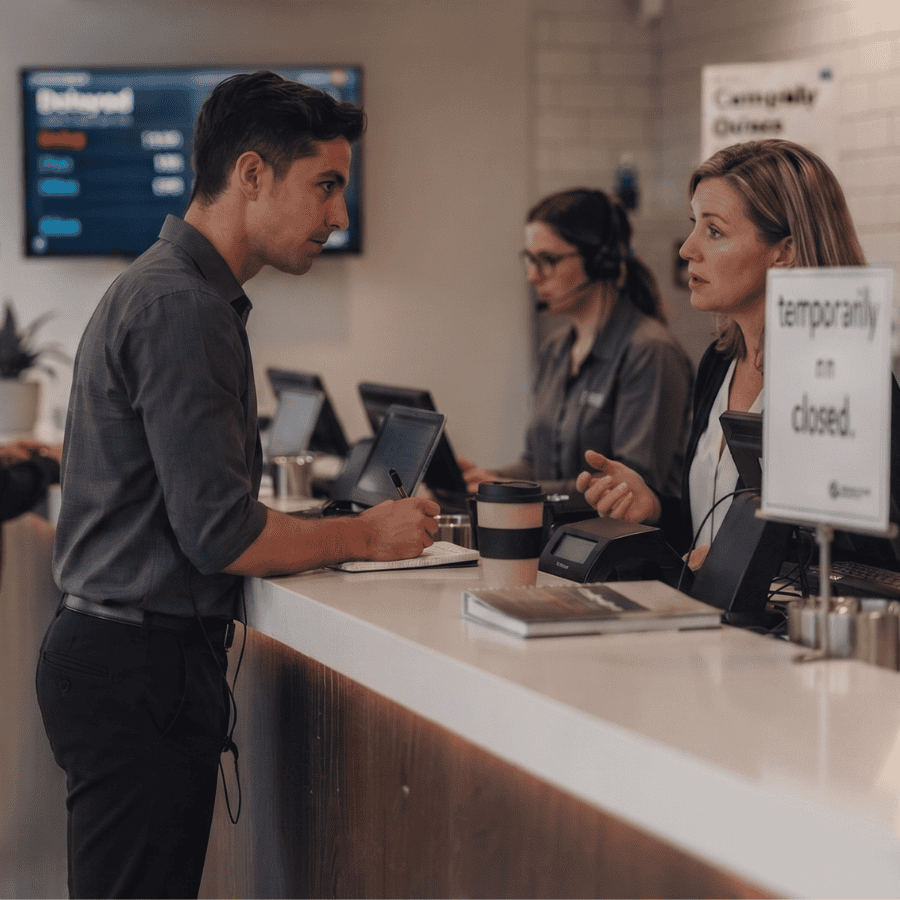
This is a discipline, not a personality trait. It can be built into scripts, into training, and into the first line of every email and every call. The businesses that handle adversity well are usually the ones that decided, well in advance, what their first response would sound like. They did not leave it to whoever happened to be on shift that day.
Independent research points the same way. KPMG’s 2024 Australian Customer Experience Excellence research found that most of the improvement in Australian scores came from sectors that had previously lagged, such as utilities and telecommunications, with empathy among the pillars where they closed the gap as they responded to cost-of-living pressure on customers. That reinforces exactly what customer experience during a crisis depends on: empathy shown first, before anything else.
Listen While It Is Happening, Not Only After
Most feedback systems are built to look backward. A survey goes out a day or a week after the experience, and the business finds out what went wrong once it is already over. In a moment of genuine disruption, that lag is expensive. Every hour a business spends not knowing where the pain is concentrated is an hour it cannot direct its response to where it is needed most.
Real-time listening, across calls, messages, social comments, and frontline observations, gives a business the ability to see a problem shift shape as it happens. Maybe the first wave of frustration is about a lack of information. An hour later it becomes frustration about wait times. An hour after that it is about a specific promise that was not kept. A business that is listening throughout can adjust its response to match, rather than running the same playbook from the first minute to the last.
This is also where the whole team becomes a listening network, not just a formal feedback channel. The people on the phones and on the floor are hearing the same shifts in real time. Capturing what they are hearing, and acting on it quickly, is often faster and more accurate than waiting for a report.
Learn: Turn the Hard Day Into a Better System
Every disruption leaves a trail of information about where a business’s systems and processes held up, and where they did not. Which explanations landed well with customers and which did not. Which team members found their own way to make a difficult interaction better, and what they did differently. Where the internal communication broke down before it ever reached the customer.
The mistake many businesses make once the immediate pressure has passed is to breathe out and move on. The value of a hard day is mostly still sitting there, unclaimed, once things settle. The businesses that grow fastest after adversity are the ones that treat the aftermath as seriously as the event itself: pulling together what was learned, turning it into a clear playbook, and making sure that knowledge does not live only in the memory of the people who happened to be on shift. This is often the same gap we cover in why most CX programs fail: measurement without a system to act on it.
This is where genuine growth comes from. Not from avoiding hard days, which is not realistic for any business operating at scale, but from becoming measurably better prepared for the next one.
Act: Fast, Visible, and Consistent
Learning matters, but customers do not experience a lesson. They experience an action, or the absence of one. The businesses that recover reputation fastest after a disruption are the ones that act quickly, make that action visible, and stay consistent in how they follow through.
Fast does not mean the fix itself has to be instant. It means the customer is not left wondering whether anyone is doing anything. A short, honest update is worth more than silence while a perfect solution is being built. Visible means the action is something the customer can actually see or feel, not just something happening in the background. And consistent means every team member, in every channel, is delivering the same standard of follow-through, not just the ones having a good day themselves. This is what good crisis customer service looks like in practice.
This is also where frontline authority matters. Team members who are equipped, trained, and trusted to make things right in the moment, without waiting for approval through several layers of management, are able to turn a difficult interaction around while it still matters to the customer. A generous gesture offered three weeks later, after a complaint has been escalated twice, does not carry the same weight as the same gesture offered on the day.
Bring the Whole Team Into It
A disruption tests something that is easy to miss during normal operations: whether customer experience is actually owned across the whole business, or whether it quietly belongs to one department that everyone else assumes will handle it.
The businesses that respond well to adversity are usually the ones where sales, operations, delivery, support, and leadership all understand they are part of the same customer promise, not separate functions with separate scorecards. When something fails, the phone team, the delivery team, the people managing supplier relationships, and the leaders setting priorities all need to be moving in the same direction, informed by the same information, working toward the same outcome for the customer.

This kind of alignment does not happen by accident on the day it is needed. It is built well before that, through a culture where every team understands how their part of the business affects the customer experience, and where the people closest to the customer are genuinely listened to, not just directed.
There is also a quieter benefit to bringing the whole team into a hard day well. People remember being part of something that mattered. A team that pulled together under pressure and did right by customers carries that experience with them, and it becomes part of how they see the business and their place in it. Recognising that effort, clearly and specifically, afterwards is not a nice extra. It is part of what makes the next hard day easier to face.
Growth Doesn’t Pause for a Bad Day
It is tempting to treat a disruption as a pause button on growth. Deal with the crisis, get back to normal, then return to the real work of building the business. But the businesses that grow fastest tend to see it differently. A hard day is not a break from the customer experience story. It is one of the most important chapters in it.
Competitors are often tested by the same kinds of disruptions, sooner or later. A weather event, a supplier failure, a system issue, an industry-wide problem nobody saw coming. The businesses that respond with empathy, that listen and learn quickly, and that act with consistency and visible care, are often the ones that come out of a hard period with customers who trust them more, not less. That trust becomes a genuine point of difference, one that is very hard for a competitor to copy, because it was earned in exactly the moment when it was hardest to deliver. This is the same shift from measuring to growing that we cover in CX measurement vs CX growth program.
This is where a positive, growth-focused mindset matters most. Not a forced optimism that pretends the disruption did not happen or was not difficult, but a genuine belief that the business, and the people in it, can come out of a hard day better prepared, more connected as a team, and more trusted by the customers who stayed with them through it.
A Practical Perspective
None of this requires a business to be perfect on the day something goes wrong. Customers do not expect perfection. What they remember is whether they were treated with genuine care, kept informed, and looked after by people who seemed to actually want to help.
Adversity that sits outside anyone’s direct control, a system failure, a supplier letting a business down, an event nobody could have predicted, will happen to every business eventually. What separates the businesses that grow through those moments from the ones that are set back by them is rarely the disruption itself. It is the strength of the human system that responds to it: the empathy shown first, the listening that continues throughout, the learning that gets captured properly, the action that customers can actually see, and a team that feels genuinely part of the response rather than left to handle it alone.
Building that system before it is tested is work worth doing now, while things are calm enough to do it properly.
Frequently Asked Questions
What does customer experience during a crisis actually look like?
During a crisis, customers are less focused on perfection and more focused on communication, honesty, and response speed. A business that listens in real time and acts visibly will retain more trust than one that focuses only on fixing the technical problem.
What is the most important first step in crisis customer service?
Acknowledgment. Before any explanation or timeline, customers need to know the disruption has been noticed and is being taken seriously. Leading with empathy, before the practical detail, changes how everything that follows is received.
Can a customer experience crisis actually help a business grow?
Yes. Businesses that treat a hard day as a test of their whole CX system, not just a technical fault, often come out with stronger trust and loyalty than before the disruption, because that trust was earned under pressure.
Why does real-time feedback matter more during a disruption than a weekly survey?
A crisis shifts shape by the hour. Real-time listening across calls, messages, and frontline observations lets a business redirect its response as the problem changes, rather than running the same plan from the first minute to the last.
Worth a Conversation?
If a hard day has tested your business recently, or you want to make sure your team is ready for the next one, reach out to the Feedback ASAP team. We will listen first and help you build a CX approach that turns adversity into a strength, not just a story you would rather forget.
Most CX programs measure. We improve.