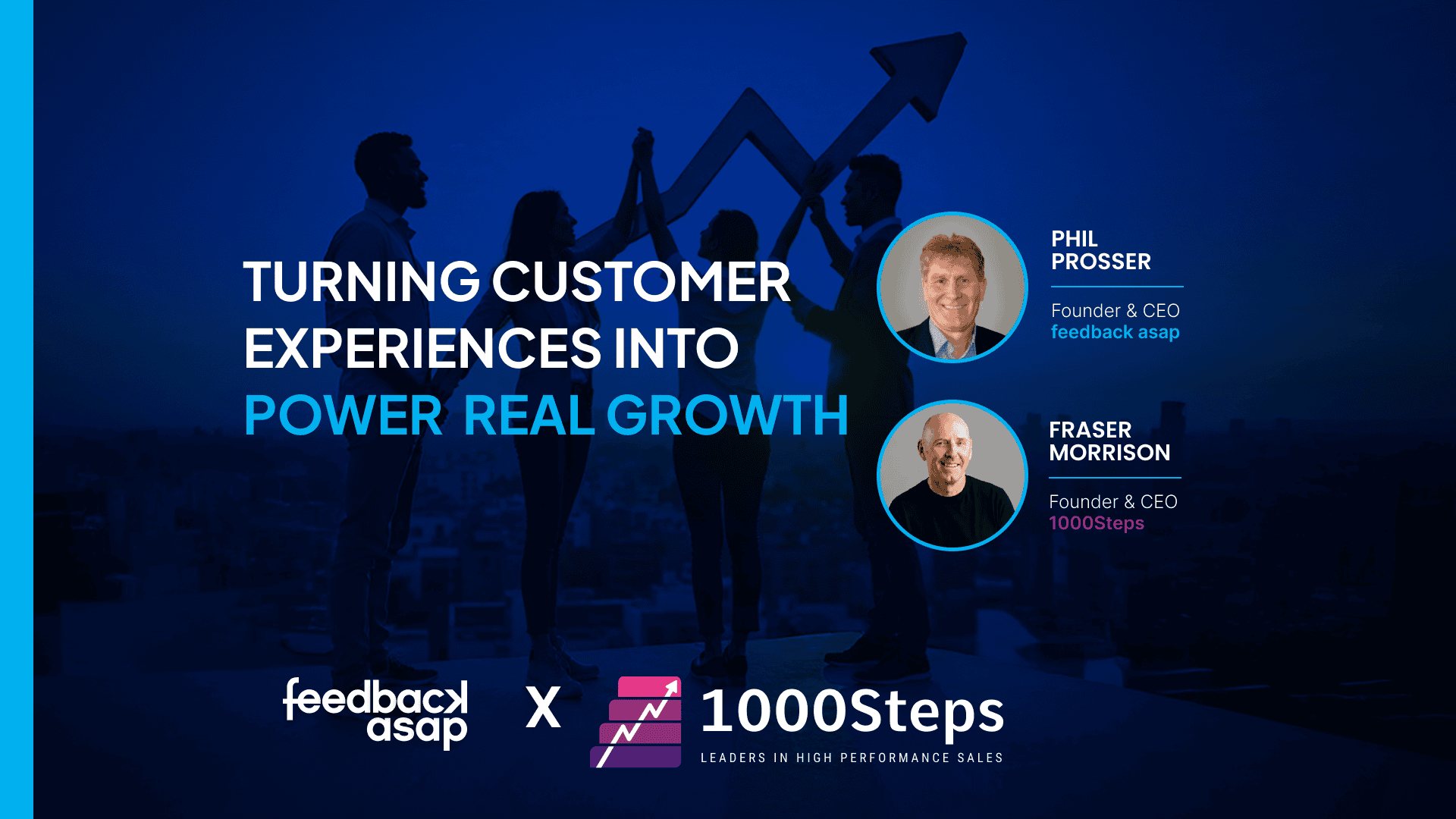

WEBINAR REPLAY: Phil Prosser NPS Interview Webinar
By Julian Barton, EGM | Feedback ASAP | feedbackasap.com
An 89 NPS didn’t stop one appliance retailer going into liquidation. In the replay of Is Your NPS Score Actually Growing Your Business?, Phil Prosser, Founder and CEO of Feedback ASAP, shows why the number on your dashboard can be lying to you, and what actually drives growth instead. Cohosted by Fraser Morrison.
Why an NPS score can hide a business in decline
The recent Phil Prosser NPS Interview Webinar opened with a warning most CX teams do not want to hear: a high NPS does not guarantee growth. He pointed to an Australia and New Zealand appliance retailer that held an 89 NPS and still went into liquidation. The score looked strong because it only measured existing customers, while the retailer's product range had already lost relevance to the next generation of buyers.
It’s a rearview mirror, it’s not the actual result.
Phil Prosser, Founder and CEO, Feedback ASAP
Data rich, action poor: the real challenge behind the number

The bigger issue, Phil argued, is that most organisations are swimming in data but starved of direction. Knowing a score moved from 73 to 75 does not tell a frontline team what to do differently tomorrow. The real questions are simpler and harder: what does the number mean, how does it get actioned, and is there an emotional connection with customers that explains the why behind it.
Where the real money is made
A 700 location retail client made the gap visible. The top 20 percent of stores generated 145 percent higher average transaction value than the bottom 20 percent, while the NPS difference between them was only 15 percent. The money was being made in the experience itself, well before any survey was sent.
What actually makes an advocate
Phil drew a sharp line between likelihood to recommend and having actually recommended. In one global business, NPS sat at a healthy 83, but only 58 percent of customers had genuinely advocated for the brand.
Advocacy is quantifying the value. It’s a genuine connection to the customer.
Phil Prosser, Founder and CEO, Feedback ASAP
The trust curve: the real math behind referrals
The numbers behind referred customers are hard to ignore.
- 88 percent of people trust recommendations from friends and family over other marketing
- Referred customers spend roughly twice as much as paid advertised customers
- Retention runs 37 percent higher among referred customers
- Lifetime value can run four to eight times greater
It is also, as Phil pointed out, free. No campaign spend, no media buy, just an existing customer telling someone else what they experienced.
What the research backs up
Phil referenced several independent studies that reinforce the same pattern: a 12 percentage point increase in advocates has been linked to a 200 percent increase in growth, top loyalty performers have shown two and a half times higher sales growth, and referred customers generate 16 percent more profit while being 18 percent more loyal overall.
The 24 percent growth gap between top and bottom performers
Comparing the top and bottom 20 percent of stores in one network, the top tier grew 24 percent year on year and generated three times more new customers. The difference came down to advocacy ratio: 78 percent of the top tier’s new customers came through advocacy, against 32 percent for the bottom tier. Same prices, same range, different growth.

Inside the Advocacy Zone: a three phase framework
Phil laid out a practical three phase approach any team can apply.
Phase 1: Quantify where you stand
Establish what proportion of existing customers are genuine advocates, and what proportion of new customers are arriving through referrals and reviews rather than marketing spend.
Phase 2: Define the value
Work out what a 10 percentage point increase in advocates would actually be worth in dollar terms, so the opportunity is a clear number, not a vague ambition.
Phase 3: Drill into why
Understand what differentiates advocates from non-advocates and passives, particularly where expectations are being exceeded or missed.
The eight standards behind a $150 sale
One of the clearest examples from the session: when all eight service standards are delivered consistently, average sale value sits at $150 and NPS hits 99.
- Miss two standards: sale value drops 16 percent
- Miss four or more standards: sale value drops 28 percent, NPS falls to 54
Every standard has a value.
Phil Prosser, Founder and CEO, Feedback ASAP
Turning advocacy into compounding growth
The close of the session tied it together: personalisation, team ownership, and a clear action rhythm across daily, weekly, monthly and quarterly cycles turn advocacy from a nice number into compounding revenue. Trust comes first, then value, then advocacy, and the growth that follows compounds because it is not a one off transaction.
If they tell others, you build a brand.
Phil Prosser, quoting Steve Jobs
Feedback ASAP works with organisations across 74 countries to turn customer feedback into measurable growth, connecting frontline behaviour, standards and commercial outcomes rather than stopping at a dashboard. Worth a conversation about where your advocacy numbers actually sit?
Frequently Asked Questions
Can a business have a high NPS score and still be losing customers?
Yes. Phil Prosser NPS Interview Webinar, explained that NPS only measures existing customers who respond to the survey. A business can score highly among that group while losing relevance with new customers entirely, as shown by the appliance retailer example in this session, which held an 89 NPS before going into liquidation.
What is the difference between NPS and customer advocacy?
NPS measures likelihood to recommend, a stated intention. Advocacy measures whether a customer has actually recommended the business. The gap between the two can be significant, one global business in this session held an 83 NPS but only 58 percent of customers had genuinely advocated.
How much more do referred customers spend compared to other customers?
Referred customers spend roughly twice as much as paid advertised customers, show 37 percent higher retention, and can carry a lifetime value four to eight times greater, according to the data shared in this session.
What is the Feedback ASAP Customer-Led Performance Improvement System?
It is a system that turns customer feedback into measurable growth actions, rather than simply reporting scores. Feedback ASAP works with organisations across 74 countries to link feedback directly to frontline behaviour, standards, and commercial outcomes.
Where can I watch the full NPS growth webinar replay?
The full session, Is Your NPS Score Actually Growing Your Business, featuring Phil Prosser and cohost Fraser Morrison, is embedded above and available in full on YouTube.